Carnivorous Plants
Found around the world, carnivorous plants belong to several different families and trap their prey in several different ways. In most cases, they are responding to nutrient deficiencies in their native soils and by digesting animal prey, can acquire the necessary elements. Many carnivorous plants live in bogs with soils poor in nitrogen, but they can also be found growing on the rain-soaked tepuis (sandstone plateaus) of South America, in the nutrient-deprived sands of Australia, or as epiphytes on the branches of tropical trees in Southeast Asia.
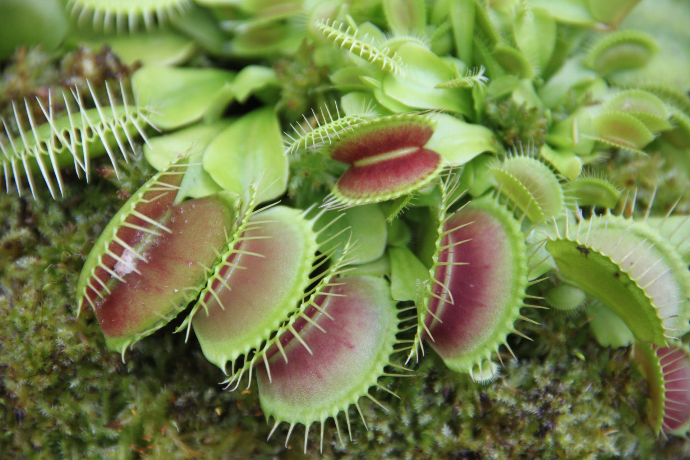
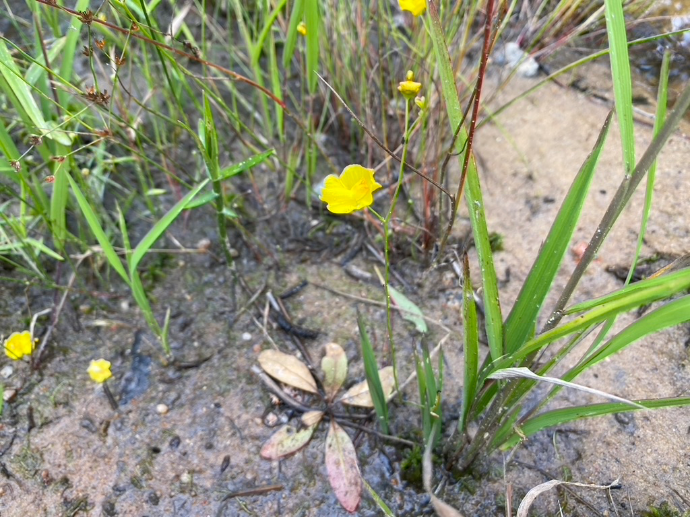
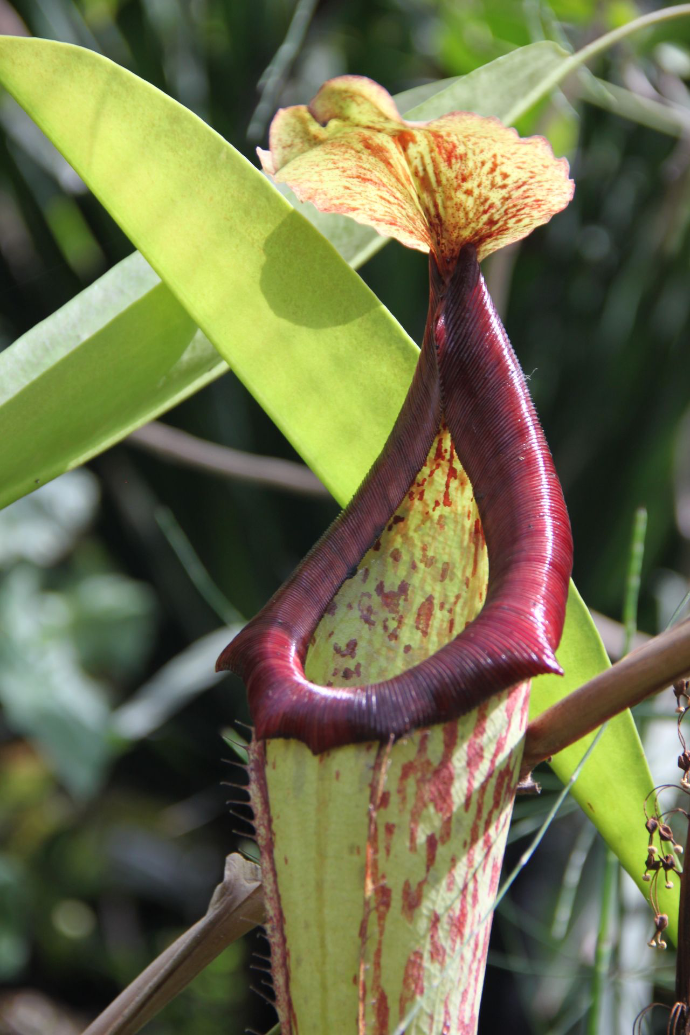
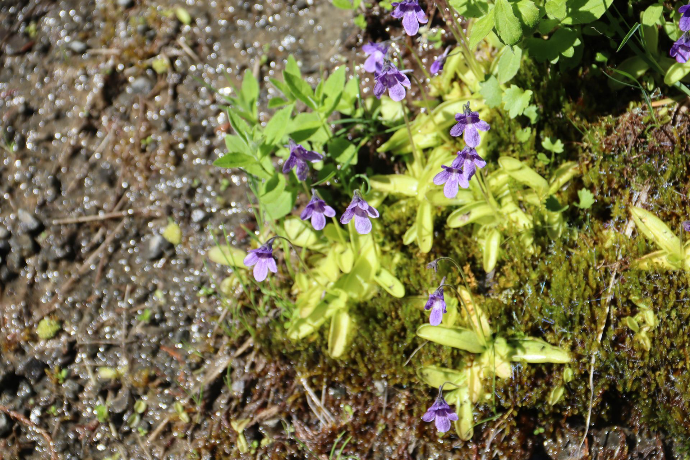
Photos top row: Dionaea muscipula, Nepenthes carunculata, Pinguicula vulgaris, Utricularia subulata.
Pitcher plants create tubular ‘pitchers’ that can hold water, into which insects (occasionally larger animals) fall and drown. The plant can retrieve nutrients from the decomposing bodies. Some pitchers are filled with water, but some species can produce a liquid containing digestive enzymes to better dissolve their prey. Pitcher plants fall into three different families: Sarraceniaceae (Americas), Nepenthaceae (Southeast Asia, Indian Ocean Islands), and Cephalotaceae (Australia).
Sticky traps are another common way of capturing small insects and are the specialty of sundews (Drosera: Droseraceae) and butterworts (Pinguicula: Lentibulariaceae). Sundew leaves can roll up their edges to better capture ensnared insects. Several other plants with sticky stems, such as petunias, while perhaps not carnivorous do capture insects and this may be an early evolutionary step towards carnivory. The western false asphodel (Triantha occidentalis) has sticky flower stems and was recently (2021) shown to be carnivorous.
The third type of trap is best exemplified by the Venus flytrap (Dionaea muscipula), which can actively capture insects using its modified leaves. Their red surfaces produce nectar and attract insects and even small amphibians. Hairs on the surface act as triggers, only closing the trap if touched twice within 20 seconds. This prevents the traps being triggered by raindrops, neighboring plants, or other random stimuli. Effectively, the flytrap is the only plants that can count, though only up to two! Bladderworts (Utricularia) also have active traps, and these are found in the soil or underwater in these aquatic or semi-aquatic plants. The traps resemble bladders and have a trapdoor that springs shut after the prey is sucked into the bladder. With over 200 species, Utricularia is the largest genus of carnivorous plants; we have six species here in Washington.